1. Why Firms Build Their Own Algo Trading Platforms
Retail algo tools are built for the average user. As soon as a firm runs several strategies across many accounts, needs custom risk rules, or wants to offer strategies to its own clients, those tools start to limit it. Order timing, re-entry logic, multi-leg options handling and reporting rarely work exactly the way the business needs.
A custom platform turns your trading rulebook into software you own. The strategy code, the risk engine and the data stay under your control, and the platform can grow from one strategy to dozens without changing tools.
2. The Core Architecture
Every reliable algo platform is built from a small set of services with clear responsibilities. Keeping them separate makes the system easier to test, scale and audit.
Building blocks of a production algo platform
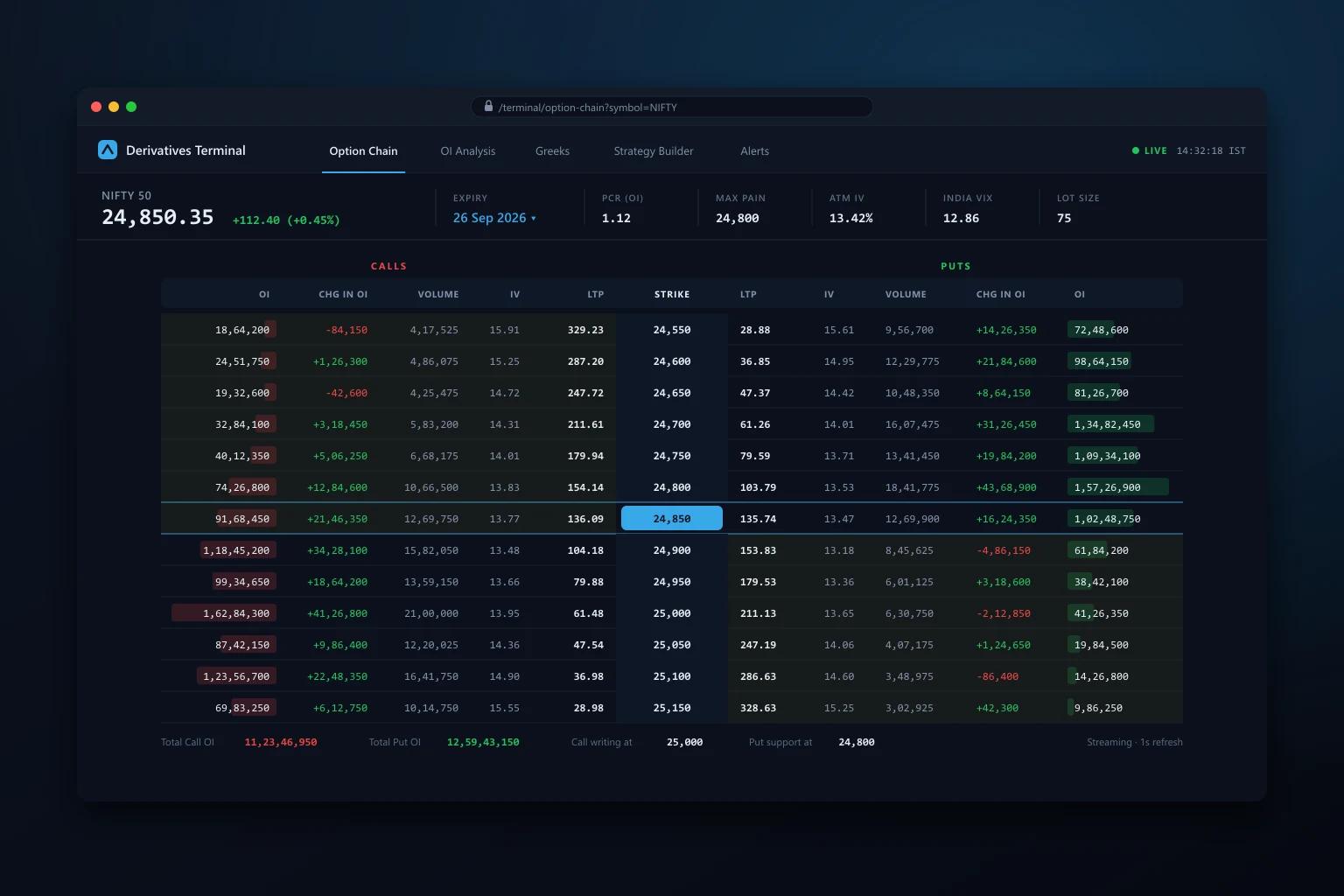
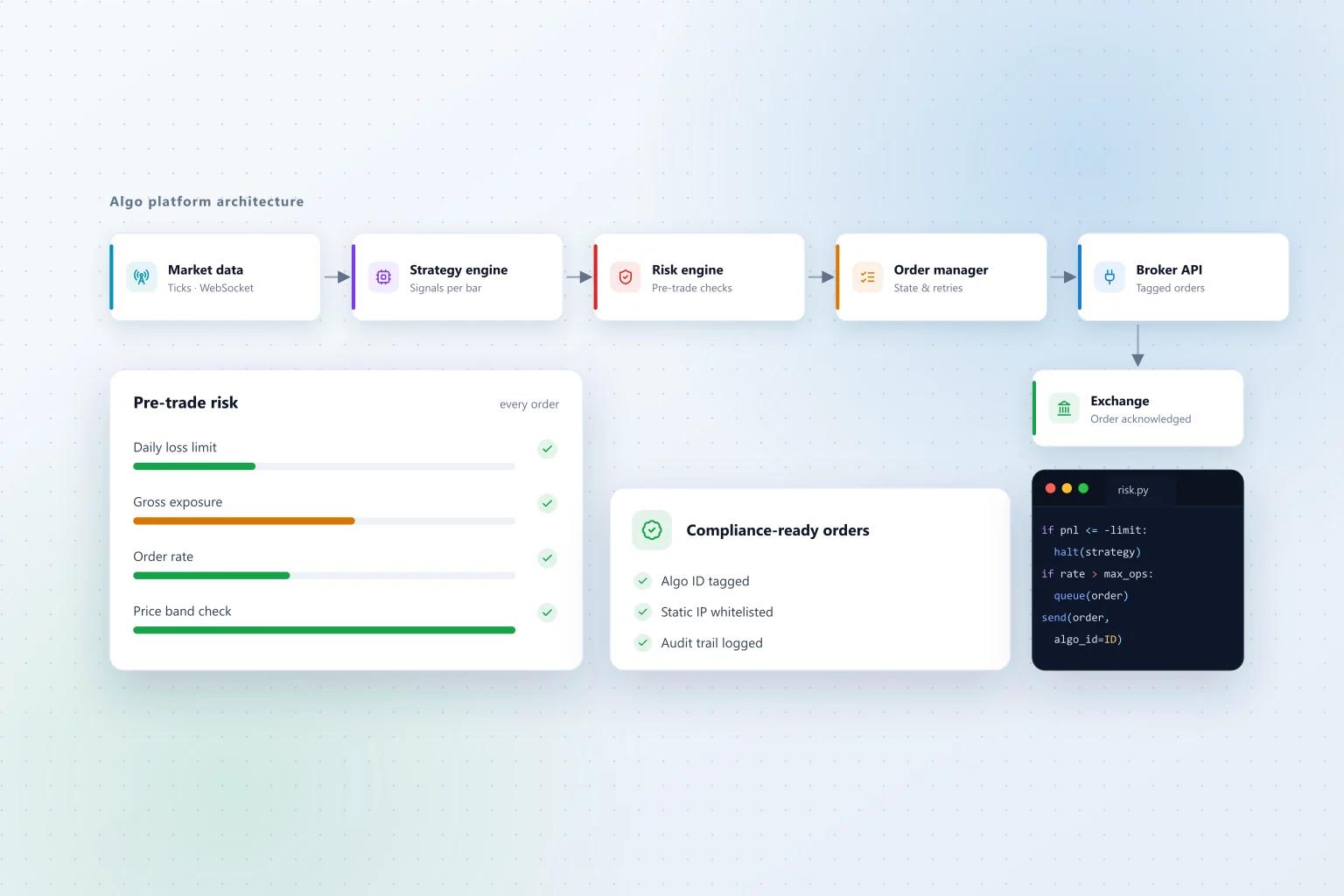
Market data service: Receives live ticks from the broker or data vendor over WebSocket, normalises them and stores history for replay and backtesting.
Strategy engine: Runs strategy code on each tick or bar and produces signals, using the same code path in backtest, paper and live modes.
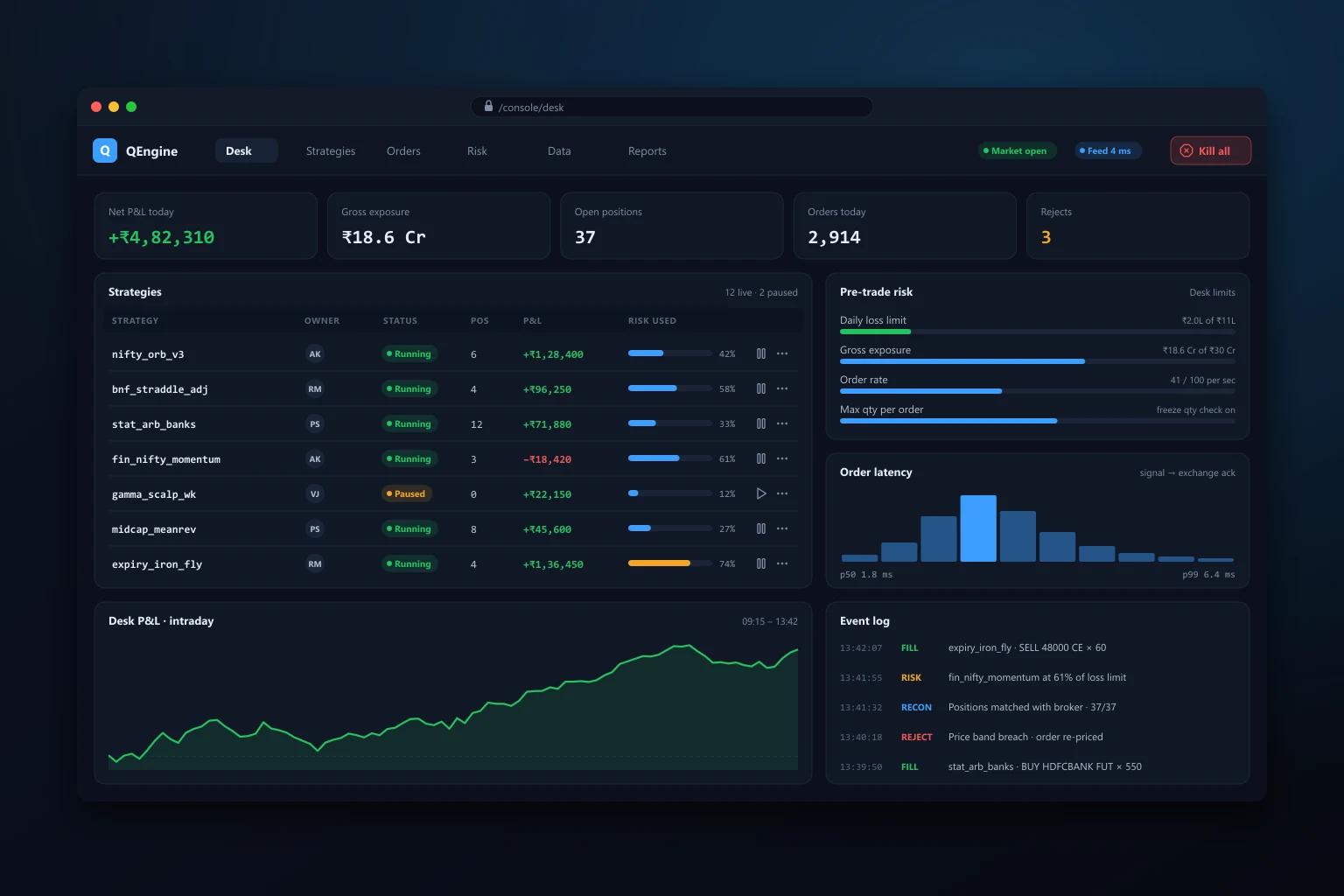
Pre-trade risk engine: Checks every order against loss, exposure, quantity and order-rate limits before it can leave the system.
Order management system: Tracks each order through its full life cycle: placed, modified, partially filled, filled, rejected or cancelled.
Broker connectors: Translate one internal order format into each broker's API and handle authentication, rate limits and retries.
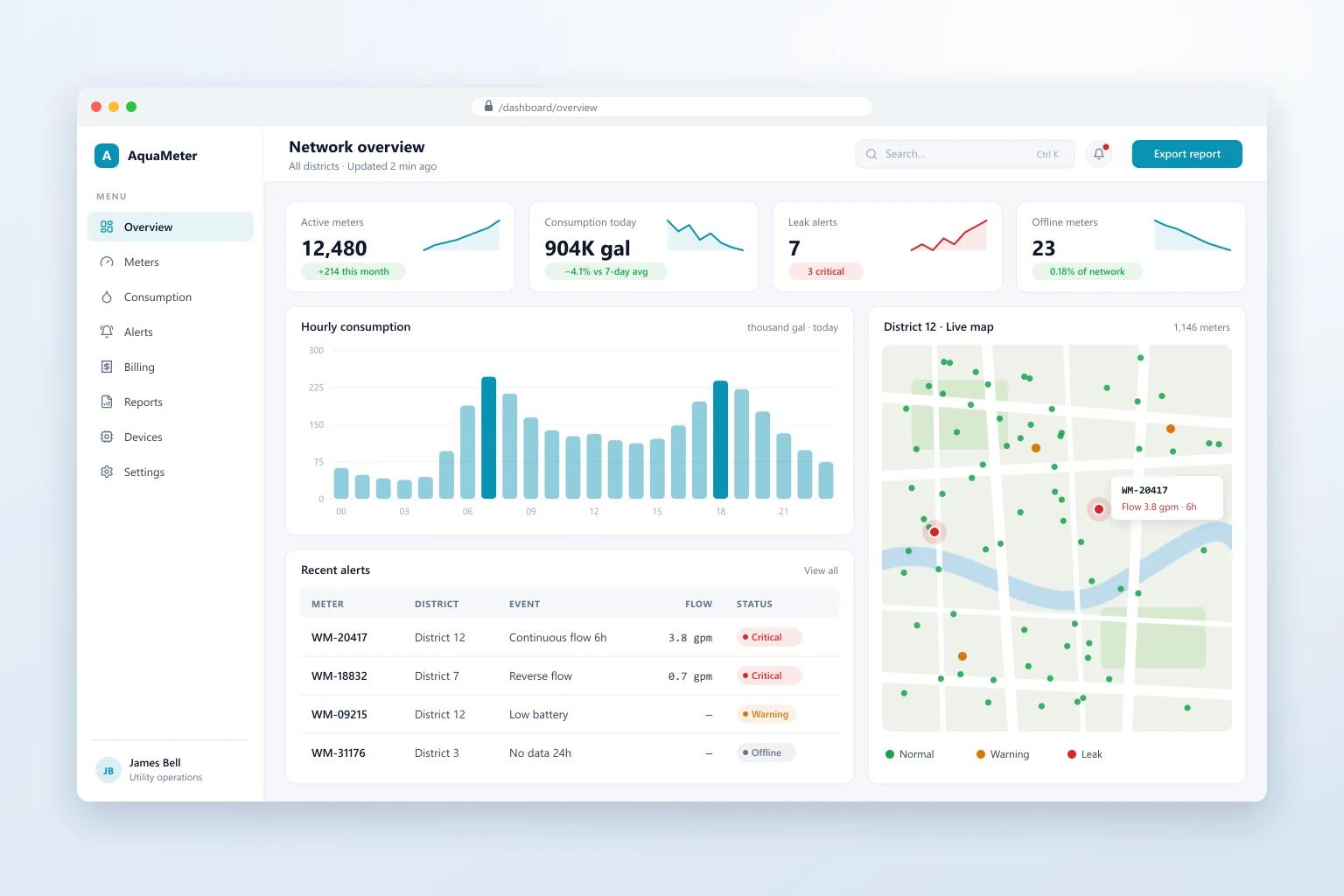
Monitoring and reporting: Live P&L, positions, latency and an event log, with alerts and a kill switch for the trading desk.
3. Integrating Broker APIs
Broker APIs differ in authentication, order types, rate limits and how they report fills. A connector layer hides these differences so strategies never talk to a broker directly, and adding a new broker does not mean rewriting strategies.
Most Indian broker APIs use session tokens that expire daily, so the platform should track token status and alert the team before market open if a login is needed. Orders need idempotent retries so a network timeout never creates a duplicate position, and positions should be reconciled against the broker's records throughout the day.
What a robust broker connector handles
Session management: Daily login flows, token refresh and clear alerts when an account is disconnected.
Rate limiting: Queues orders within each broker's per-second limits instead of letting them be rejected.
Order updates: Consumes order and trade updates over WebSocket and falls back to polling if the stream drops.
Reconciliation: Compares internal positions with the broker's positions and flags any mismatch immediately.
4. Risk Controls That Run Before Every Order
The risk engine is the most important part of the platform. It should sit between the strategy and the broker so that no order, from any strategy, can bypass it.
Controls we recommend for every algo platform
Daily loss limit: Stops new entries and optionally squares off when a strategy, account or desk reaches its maximum loss.
Position and exposure caps: Limits quantity per order, per instrument and total gross exposure.
Order-rate limits: Caps orders per second to stay within broker and exchange thresholds.
Price sanity checks: Rejects orders priced far from the last traded price or outside the exchange's price bands.
Kill switch: Lets the desk pause or flatten any strategy, or everything, in one action.
5. Compliance: What SEBI's Algo Trading Framework Means for Your Software
In 2025 SEBI introduced a framework for safer retail participation in algorithmic trading, implemented by stock exchanges and brokers in phases. For software teams, the practical impact shows up in how orders are tagged, how API access is secured and how strategies are registered.
Rules and timelines are set by SEBI and the exchanges and continue to evolve, so always confirm the current requirements with your broker before going live. Designing for them from day one is far easier than retrofitting them later.
Requirements to design for
Algo identification: Orders from approved algos carry an exchange-provided identifier, so the order layer must tag every order correctly.
Secure API access: Broker API access is tied to whitelisted static IP addresses and stronger authentication, which affects how you host the platform.
Strategy registration: Algos that cross exchange-defined thresholds must be registered through the broker before use.
Audit trail: Keeping a complete, timestamped record of every signal, order and modification makes reviews and dispute resolution straightforward.
6. Testing: Backtest, Paper Trade, Then Go Live
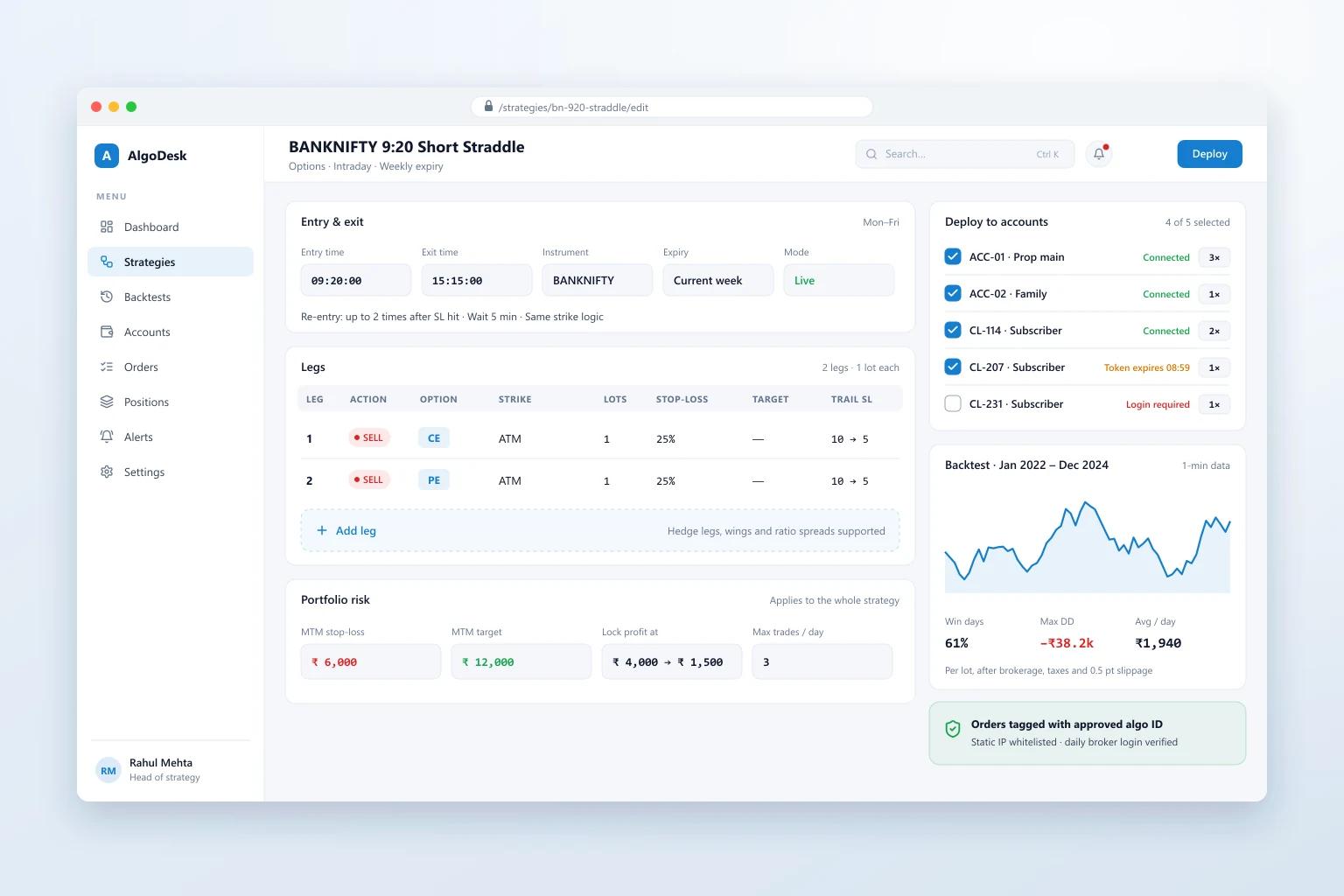
A strategy should move through three stages. First, backtest it on historical data with realistic costs and slippage. Next, run it in paper-trading mode against live prices with simulated fills, which exposes timing and data issues a backtest cannot. Only then should it trade real money, starting with small size.
Using the same strategy code in all three stages is what makes this process trustworthy. If research code and production code differ, the backtest is testing a different system from the one that trades.
7. Build or Buy?
Off-the-shelf platforms are a good starting point for individual traders testing simple ideas. A custom platform makes sense when you run multiple strategies or accounts, need risk rules the tools do not support, want to offer strategies to clients, or need full ownership of your code and data.
Accel Fintech designs and builds algo trading platforms, broker integrations, backtesting engines and risk systems for traders, brokers and fintechs. If you are planning a platform, our team can review your requirements and suggest an architecture and a phased delivery plan.